The Missing Link in Movement: Why Dynamic Release Redefined My PracticeA Review of the Dynamic Myofascial Release Course at RSM International Academy
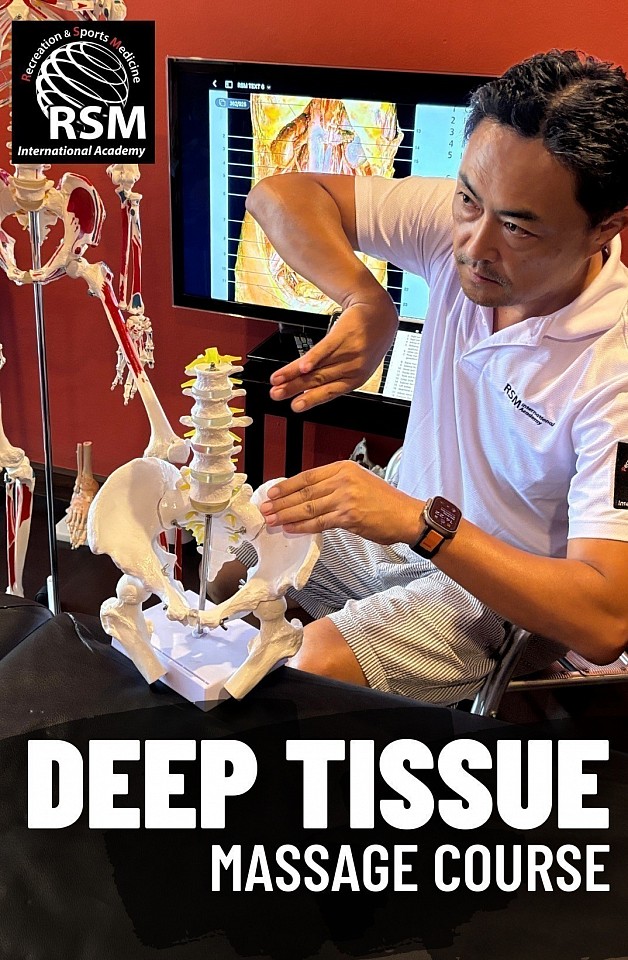
As a professional who spends half my life teaching movement on the mat and the other half treating athletes on the table, I thought I had a handle on mobility. I entered the Dynamic Myofascial Release training at RSM International Academy expecting a high-quality refresher. I had already completed their Deep Tissue and Trigger Point courses, so I assumed this would simply add a few more tools to my belt.
I was wrong. This wasn’t just an enhancement; it was a complete paradigm shift. It transformed how I understand the relationship between fascia, nerve glides, and the kinetic chain. It felt less like a workshop and more like stepping into a new tier of professional practice—one deeply rooted in sports medicine and functional biomechanics.
A New Definition of Mobility
From the first hour, it was clear that Hironori Ikeda (MSc Sports Medicine) teaches from a depth of clinical experience—over 25 years—that is rare to find. As a Yoga and Pilates instructor, I often focus on "lengthening." However, Ikeda taught us that true mobility isn't just about range of motion (ROM); it’s about the sliding surfaces between tissues.
We learned that improving mobility with myofascial release requires more than just pulling on a limb. It involves restoring the glide between deep fascial layers, freeing intermuscular adhesions, and ensuring nerves can move without friction. This is what he calls "Dynamic Myofascial Release"—an integrated system that blends soft-tissue release with directional stretching and neurofascial mechanics.
Visualizing the Layers
For me, the most powerful aspect was exploring fascia anatomy and function through high-resolution visuals. We spent five days analyzing hundreds of cadaver images and slow-motion videos of athletic movement. These weren't just textbook diagrams; they were clinical proof.
Seeing the sciatic nerve threading through the deep gluteal space or watching how fascial spirals wrap around joints changed my hands-on approach immediately. It made fascia something I could visualize, assess, and intentionally manipulate, rather than just a buzzword I use in class.
Beyond Static Stretching
One of the biggest takeaways for my practice was understanding myofascial release vs traditional stretching. In Yoga, we often hold static poses to open the body. However, I learned that if the deep fascia is adhered or the nerve pathway is stuck, static stretching often fails or even causes irritation.
The course demonstrated that by releasing specific restrictions first, the body opens naturally. We saw gains of 10 to 20 degrees in hip or shoulder mobility within seconds—not by forcing the tissue, but by freeing the restriction. This is a game-changer for my athletes who feel "tight" no matter how much they stretch.
Clinical Applications for Athletes
The sports-specific content was incredibly robust. We looked at common pathologies through a kinetic-chain lens, which is vital for anyone working with active populations. The curriculum covers essential protocols, such as myofascial release for runners suffering from IT band friction, Achilles issues, or shin splints.
Instead of chasing the pain site, we traced restrictions from the foot through the fascial lines into the pelvis. We also covered myofascial release for plantar fasciitis, treating it not just as a foot problem, but as a posterior chain issue. The speed at which pain and stiffness resolved when we treated the right fascial line—rather than just rubbing the sore spot—was shocking to many of the physiotherapists in the room.
The Nerve Connection
A standout component of this course was the integration of nerve glides. Usually, nerve mobility is treated as a separate, specialized topic. Here, it was woven into every technique. We studied how fibrosis affects nerve sliding and how this contributes to myofascial release for chronic pain.
Learning to respect nerve pathways completely changed how I approach clients with sciatica-like symptoms or chronic neck tension. It bridged the gap between structural bodywork and neurology, allowing me to treat sensitive conditions with much more confidence.
Correcting the Architecture
As a Pilates instructor, I am obsessed with alignment. This course reinforced the connection between soft tissue restrictions and structural deviation. We used myofascial release for improving posture, analyzing anterior pelvic tilts, thoracic kyphosis, and scoliosis patterns.
By assessing deep stabilizers like the multifidus, psoas, and deep rotators, we identified exactly which fascial lines were pulling the skeleton out of alignment. The difference between massage and myofascial release became obvious here: massage relaxes the muscle, but dynamic release actually changes the structural holding pattern.
The Verdict
The learning environment at RSM is intense but supportive. With small class sizes, every student received detailed feedback from Ikeda Sensei. His background in university-level anatomy and global sports medicine means every technique has a biomechanical explanation. There is no guesswork.
By the end of the week, I felt my clinical understanding had advanced more than it had in years of previous work. This course didn't just teach me a routine; it reorganized my professional identity.
For any therapist, trainer, or instructor who wants to work at a genuinely professional level, this advanced soft tissue education
is mandatory. Whether you are treating elite athletes or trying to help a client move better in their daily life, the Dynamic Myofascial Release Course provides the precise, anatomy-driven system you need to get real results.